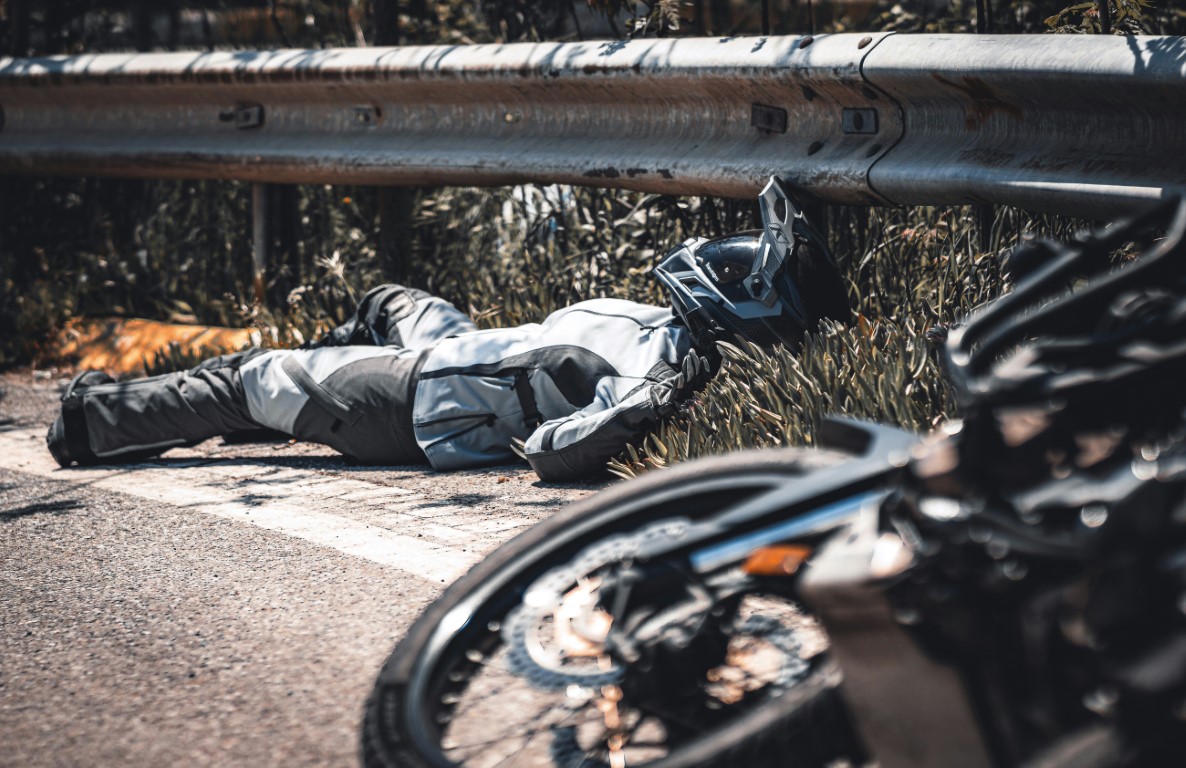
California is still the only state that expressly permits lane splitting, allowing motorcyclists to move between lanes of slow or stopped traffic to avoid congestion. While the law recognizes this maneuver as legal, riders remain vulnerable to sudden movements from drivers who rarely anticipate a motorcycle passing inches from their mirrors.
Those split seconds of misjudgment form the basis of countless catastrophic collisions every year. When a driver looks down at a phone, drifts toward a lane line, or merges without warning, a lawful act can turn into a life-altering impact.
Why Lane Splitting Carries Elevated Risk
Passenger-vehicle drivers are conditioned to look for vehicles their own size, not a slim silhouette cutting through dense traffic. A biker traveling legally between lanes can remain concealed behind SUV pillars or rear fenders until the moment a driver shifts or brakes.
Riders also face persistent visibility challenges as headlights blend into crowded highway lighting. Even practiced motorcyclists have limited time to react when a vehicle moves unpredictably into their path.
Driver Behavior That Intensifies the Danger
Many drivers casually drift, slow, or change lanes without signaling because they assume only cars occupy the surrounding space. That instinct becomes hazardous when a motorcycle is only inches away and has no metal frame to absorb an impact.

Distractions like texting, navigation systems, and eating amplify the risk because they reduce the split-second awareness needed to avoid a rider. On top of that, some motorists become hostile when they see a motorcycle bypassing stalled traffic, creating deliberate blocks that violate the rider’s right to proceed safely.
The “Safe and Prudent” Standard Every Rider Should Understand
California does not grant unrestricted freedom to lane split under all conditions. Riders must operate in a manner considered “safe and prudent,” a flexible standard shaped by conditions and behavior at the moment of a crash.
CHP guidelines, though not binding law, are the benchmarks insurance adjusters and courts use to evaluate fault. Riders are encouraged to limit their speed differential to ten miles per hour, avoid splitting when traffic exceeds thirty miles per hour, and remain between the #1 and #2 lanes where drivers expect them most.
These guidelines matter because insurers rely on them to argue a rider acted imprudently. If an adjuster can show you were splitting between fast-moving lanes at high speed, they will attempt to deny or reduce compensation even when a driver clearly cut you off.
Common Liability Arguments Used Against Riders
Insurance companies frequently rely on “biker bias” to shift responsibility onto motorcyclists regardless of what actually happened. The most common tactic is the “suddenly appeared” defense, where a driver claims the rider emerged from nowhere.
A skilled attorney shows that drivers have a continuing duty to check mirrors and blind spots before merging or drifting. When a driver moves without looking, liability remains with the motorist even if the rider was splitting at the time.
Another tactic is the “gap” defense, where a driver says they moved into an open space without realizing a motorcyclist was approaching. Legally, the merging vehicle must yield to established traffic, which includes a lane-splitting rider moving consistently between lanes.
Comparative Negligence: Why You Can Still Recover Compensation
California follows a pure comparative negligence system that allows riders to recover damages even when partially at fault. This rule protects motorcyclists from losing their entire claim simply because an insurer argues they were “too fast” or “too close.”
Consider a common scenario where a rider splits lanes slightly above CHP-recommended speeds when a driver suddenly changes lanes without signaling. A court might assign twenty percent fault to the rider, but place the remaining eighty percent on the driver for the unsafe maneuver.
That means the rider still recovers eighty percent of their damages. Without legal representation, insurers try to flip those percentages and minimize their payout, making early legal help essential.
The Aftermath of a Lane-Splitting Collision
Motorcyclists bear the full force of impact without the protective structure that shields car occupants. This leads to traumatic brain injuries, spinal damage, fractures, and long-term mobility limitations that require extensive medical care.
Victims also face lost income, chronic pain, and emotional trauma that reshapes family routines and careers. Insurance companies often exploit the complexities of lane-splitting law to argue reduced liability, slowing settlements and undercutting rightful compensation.
How A Personal Injury Law Firm Protects Injured Motorcyclists
Villasenor Law Offices has deep experience proving that riders were operating lawfully and prudently at the time of a crash. Attorneys gather traffic-density data, witness accounts, dash-cam footage, and roadway measurements to demonstrate that it was the driver’s distraction or unsafe merge (not lane splitting) that caused the collision.
The Poway personal injury attorney team works closely with surgeons, rehabilitation specialists, and vocational experts to calculate full lifetime costs. This ensures that cases account for future surgeries, long-term physical therapy, lost earning capacity, and adaptive equipment rather than short-term medical bills alone.
What Riders Should Do After a Lane-Splitting Accident
Motorcyclists should seek immediate medical care and preserve all available evidence, including helmet-camera footage, damaged gear, and repair invoices. Quick action prevents insurers from shaping the narrative before the facts are fully understood.
Early legal intervention ensures your rights remain protected while crucial evidence is preserved. Riders who wait may lose access to video recordings, witnesses, and accident-scene details that could dramatically strengthen their case.
Take the Next Step Toward Recovery
If you were injured while legally lane splitting, you deserve an advocate who understands the law, the biases riders face, and the strategies insurers use to shift blame. Villasenor Law Offices can step in to handle negotiations and build a compelling case while you focus on healing.
Contact Villasenor today for a confidential consultation and a clear roadmap forward. You should not bear the financial burden caused by a driver’s negligence when the law protects your right to share California’s roads safely.
Villasenor Law Offices
+18587077771
12396 World Trade Dr Suite 211, San Diego, CA 92128
